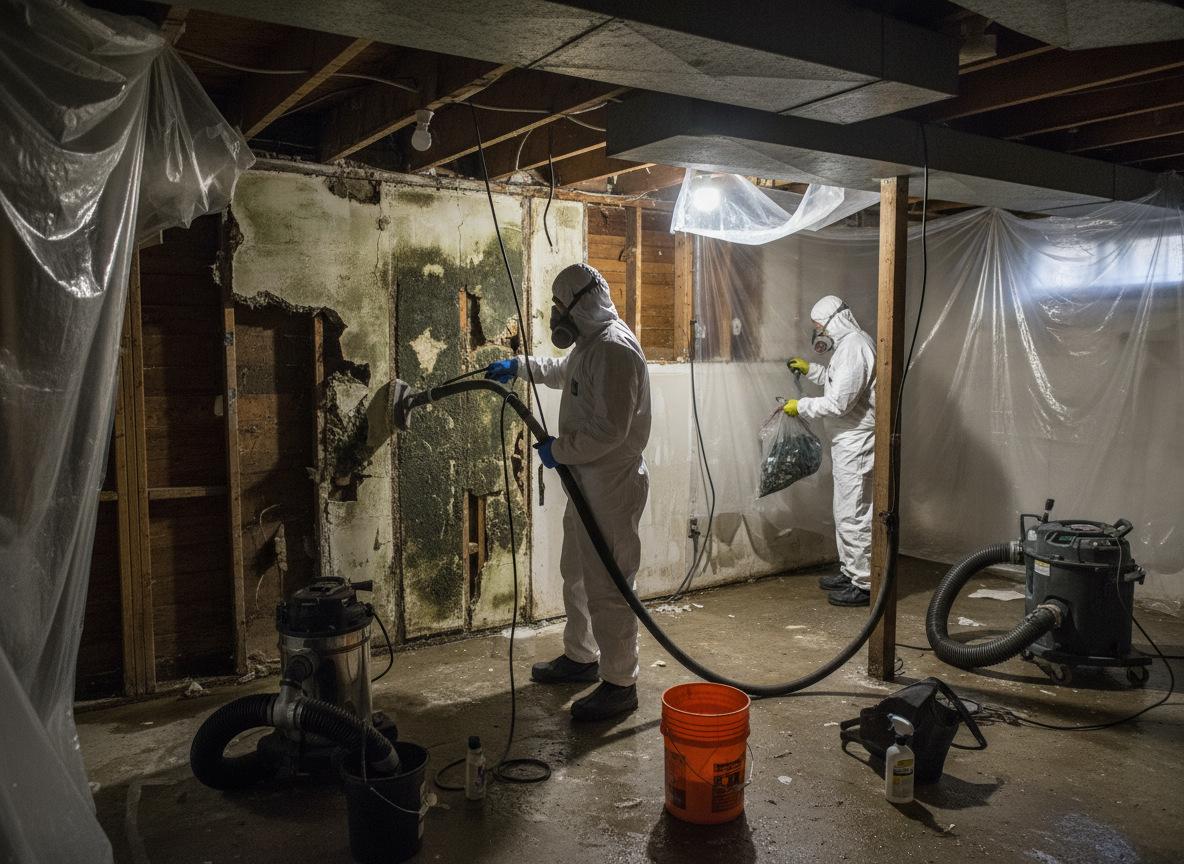
Mold remediation after water damage in Atwood requires immediate containment to stop spores from spreading through older single-story homes common along Orangethorpe Avenue and in surrounding Placentia-adjacent blocks. Technicians seal affected rooms with plastic sheeting and negative air machines before removing saturated drywall, baseboards and insulation. Hidden growth often appears behind cabinets or in crawl spaces where Orange County humidity lingers after winter storms. Proper disposal follows local landfill rules for contaminated materials.
Drying protocols use commercial air movers and dehumidifiers sized for Atwood’s typical slab-on-grade construction. Moisture meters track levels in concrete and framing until readings fall below 15 percent to prevent recurring growth. Homeowners sometimes attempt bleach cleaning, yet this fails to address root moisture or porous materials that continue feeding mold colonies. Full removal of affected sections followed by antimicrobial treatment on remaining surfaces meets current industry standards.
Post-remediation verification includes air sampling and visual inspection before any reconstruction begins. In Atwood properties built before 1980, lead-based paint and asbestos concerns require additional precautions during demolition. Technicians document every step with photos and moisture logs so insurance adjusters receive clear records. Final clearance testing confirms spore counts match outdoor baselines before residents return.
Technician insight
In Atwood, the thing that catches most people out with mold remediation after water damage is how quickly growth travels behind the stucco and into the wall cavities of 1960s-era homes once a slab leak or roof drip starts. Homeowners often stop at visible spots on the drywall, but the real problem sits in the insulation and sill plates where our meters still read high weeks later.
Hidden Growth After Roof Leak
A homeowner in Atwood noticed ceiling stains after heavy rain but delayed calling. We found extensive mold behind the drywall and in the attic insulation near the original leak point. Containment and targeted removal of the affected sections plus three days of drying restored safe conditions without further spread into adjacent rooms.
How it works
- 1
Initial Assessment
Inspect all affected rooms and hidden cavities with moisture meters and thermal imaging to map the full extent of water intrusion and mold growth.
- 2
Containment Setup
Install plastic barriers and negative air pressure to isolate the work zone and prevent spores from migrating to unaffected areas of the Atwood home.
- 3
Material Removal
Safely extract and dispose of moldy drywall, insulation, carpet and other porous materials while protecting remaining surfaces with antimicrobial agents.
- 4
Drying and Verification
Deploy drying equipment until moisture levels stabilize, then perform air sampling to confirm remediation meets clearance standards before reconstruction.
Pricing
Cost depends on square footage affected, depth of hidden growth, and drying time required; contact us for an upfront assessment.