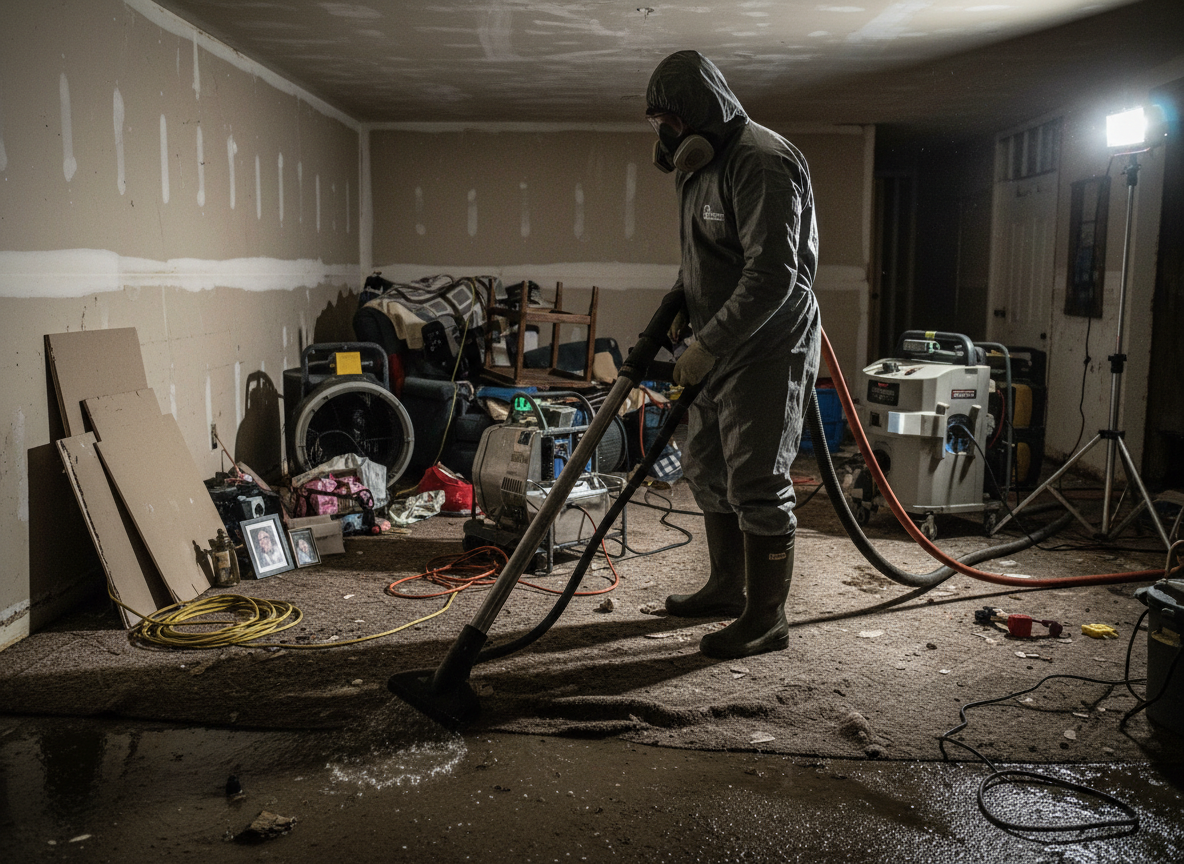
Atwood sits in northern Orange County where winter storms can drop several inches of rain in a short window, overwhelming older storm drains along streets like E Orangethorpe and La Jolla. Many homes built in the 1960s and 1970s have slab-on-grade foundations or shallow crawlspaces that allow water to travel laterally under flooring. When floodwater enters, it saturates carpet pads, baseboards, and drywall within hours, creating conditions for hidden mold growth behind cabinets and in HVAC returns.
Extraction begins with submersible pumps and truck-mounted vacuums to remove standing water before it migrates into wall cavities. Technicians then place air movers and dehumidifiers sized to the square footage, monitoring moisture levels with pin meters and thermal cameras to confirm that joists and subfloors reach dry standards. In Atwood’s clay-heavy soils, water can wick back toward the structure days later, so perimeter checks continue until readings stabilize.
Homeowners often discover that insurance requires documentation of every affected material and proof that secondary damage was prevented. Technicians photograph each step, remove unsalvageable items, and dispose of them according to local landfill rules. Final clearance includes HEPA vacuuming and application of antimicrobial agents only where porous materials remain in place.
Technician insight
In Atwood, the thing that catches most people out with Flood restoration services is how water from winter rains travels under the slab in 1960s homes along Orangethorpe and sits against the foundation for days before anyone notices elevated humidity inside.
Garage Flood After Heavy Rain
Runoff from a clogged street drain entered a single-story home near E Orangethorpe Ave during a December storm. Water reached six inches in the garage and wicked into the adjoining laundry room drywall. Extraction and targeted drying prevented mold in the adjacent living space; the homeowner returned to a dry, documented structure within five days.
How it works
- 1
Emergency Assessment
Technician arrives within hours, maps water migration paths through the home, and identifies hidden pockets in walls or under slabs common in Atwood construction.
- 2
Water Extraction
Standing water is removed with portable and truck-mounted equipment, followed by removal of saturated carpet, pad, and baseboard to prevent further wicking.
- 3
Drying and Monitoring
Industrial air movers and dehumidifiers run continuously while moisture readings are tracked daily until drywall, flooring, and framing reach acceptable levels.
- 4
Restoration and Clearance
Rebuild of removed materials, final cleaning, and documentation for insurance to close the job without lingering moisture issues.
Pricing
Pricing varies with water volume, affected square footage, and whether hidden wall or subfloor drying is required.