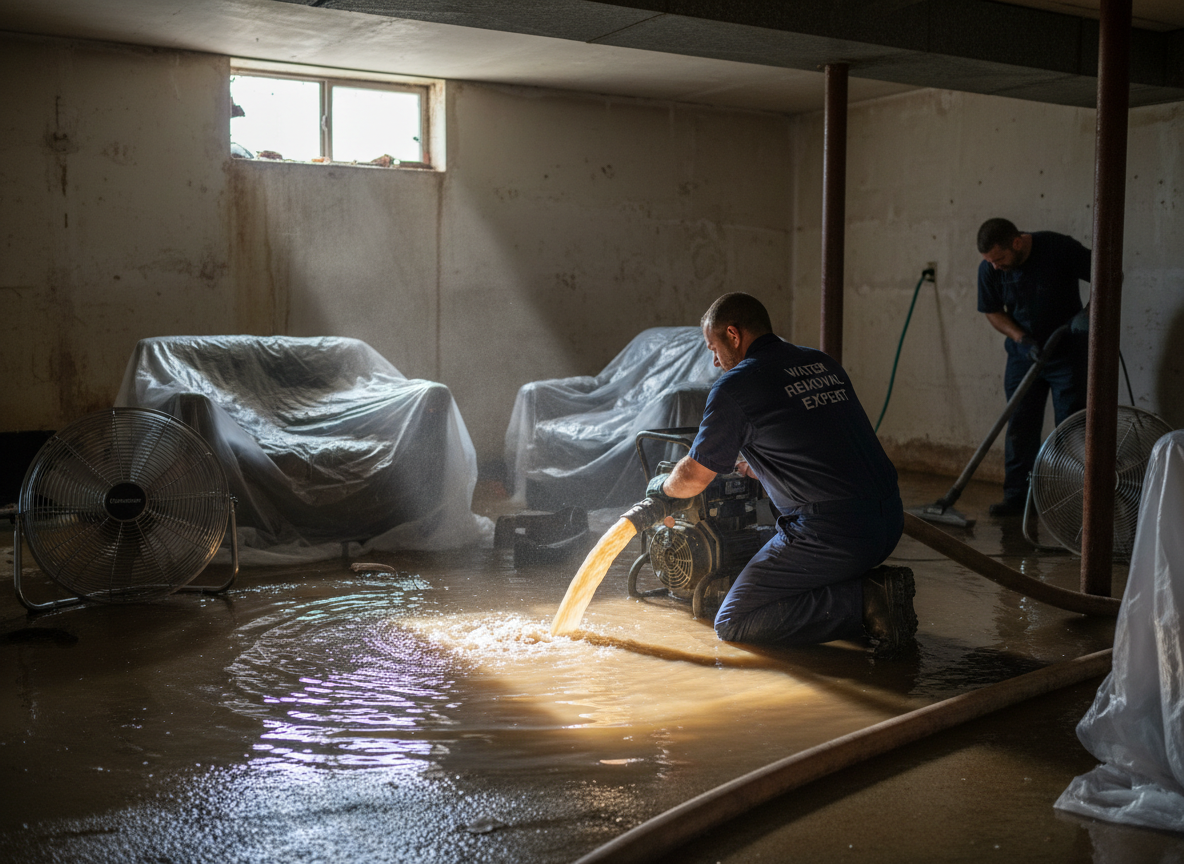
Emergency water removal in Atwood homes often involves older single-story ranch houses built along E Orangethorpe Ave where slab foundations sit close to the water table. Water migrates quickly under the concrete once it breaches the perimeter, so crews must map moisture with thermal imaging before any visible pooling reaches interior walls. Delaying extraction by even a few hours lets saturation reach adjacent units in these tightly spaced neighborhoods.
Atwood’s flat terrain and proximity to drainage channels means storm runoff can back up into crawl spaces during heavy winter rains. Technicians extract standing water with truck-mounted pumps rated for 200-plus gallons per minute, then place air movers in a grid pattern to prevent mold on subfloor plywood that is common in homes from the 1950s and 1960s. Hidden pockets behind baseboards require repeated moisture readings to confirm dryness before any reconstruction begins.
When a water heater or washing machine line bursts in an Atwood garage, the concrete floor channels water straight into the living areas through door thresholds. Crews isolate the source, remove baseboards, and run dehumidifiers at 30–40 percent relative humidity for 48 to 72 hours to pull residual moisture from drywall without demolition. This approach keeps most jobs under insurance thresholds while protecting the home’s original plaster finishes that are still present in many blocks near the railroad tracks.
Technician insight
In Atwood, the thing that catches most people out with emergency water removal is how quickly water travels under the older slab homes along Orangethorpe Ave once it finds a seam; homeowners often think the problem is contained to one room until we pull baseboards two houses down and find saturated subfloor.
Burst supply line in an Atwood garage
A supply line split overnight in a 1960s ranch home near the railroad tracks. Water crossed the garage slab and wicked into the adjacent hallway drywall. We extracted 180 gallons, mapped moisture behind the baseboards, and ran drying equipment for 52 hours until all readings matched unaffected areas.
How it works
- 1
On-site assessment
Technician arrives within the hour, locates the water source, and uses moisture meters plus thermal cameras to map affected zones in Atwood homes.
- 2
Water extraction
Truck-mounted pumps and portable extractors remove standing water from floors, carpets, and subfloor cavities before it migrates to neighboring units.
- 3
Drying and monitoring
Air movers and dehumidifiers are positioned in a calculated grid, with daily moisture logs recorded until readings return to pre-loss levels.
- 4
Final verification
All surfaces are rechecked with calibrated meters; only then is the job released for any needed repairs or reconstruction.
Pricing
Pricing depends on affected square footage, water category, and drying time required; upfront quotes are provided after the initial assessment.