Atwood sits in northern Orange County with many mid-century homes built on clay soils that retain moisture after winter rains. When water enters through slab leaks or roof penetrations, it travels along joists and under flooring before homeowners notice. Mitigation crews start with moisture meters and thermal imaging to map the full extent rather than stopping at visible wet carpet. This prevents recurring issues that appear weeks later in adjacent rooms or inside walls.
Heavy seasonal downpours between November and March can overwhelm older gutters and grading around properties on E Orangethorpe Ave and nearby streets in Placentia. Water pools against foundations and seeps into crawl spaces common in Atwood’s housing stock. Proper mitigation includes removing saturated insulation, treating affected framing with antimicrobial solutions, and setting up industrial air movers and dehumidifiers calibrated for Southern California humidity levels. Skipping these steps often leads to hidden mold growth that triggers air quality complaints.
Code requirements in Orange County call for documentation of moisture levels before any reconstruction begins. Mitigation teams log readings at multiple depths in drywall and subfloors to satisfy insurance adjusters and local inspectors. Edge cases include water that migrates into shared walls between duplexes or reaches electrical boxes, requiring licensed electricians to be brought in before drying equipment can be placed safely.
Technician insight
In Atwood the thing that catches most people out with Water damage mitigation is the clay soil along E Orangethorpe Ave that holds winter rain against older slab foundations and keeps subfloors wet for weeks after the rain stops.
Hidden Slab Leak in Atwood Home
A homeowner on a side street off Orangethorpe noticed buckling laminate near the laundry room. Meters showed elevated moisture extending under the hallway slab. Crews extracted water, removed baseboards, and ran drying equipment for six days while logging readings for the insurer. Final testing confirmed dry conditions and prevented mold in the adjacent bedroom.
How it works
- 1
Emergency Assessment
Technicians arrive within hours, locate the water source, and document all affected materials using meters and cameras.
- 2
Water Extraction
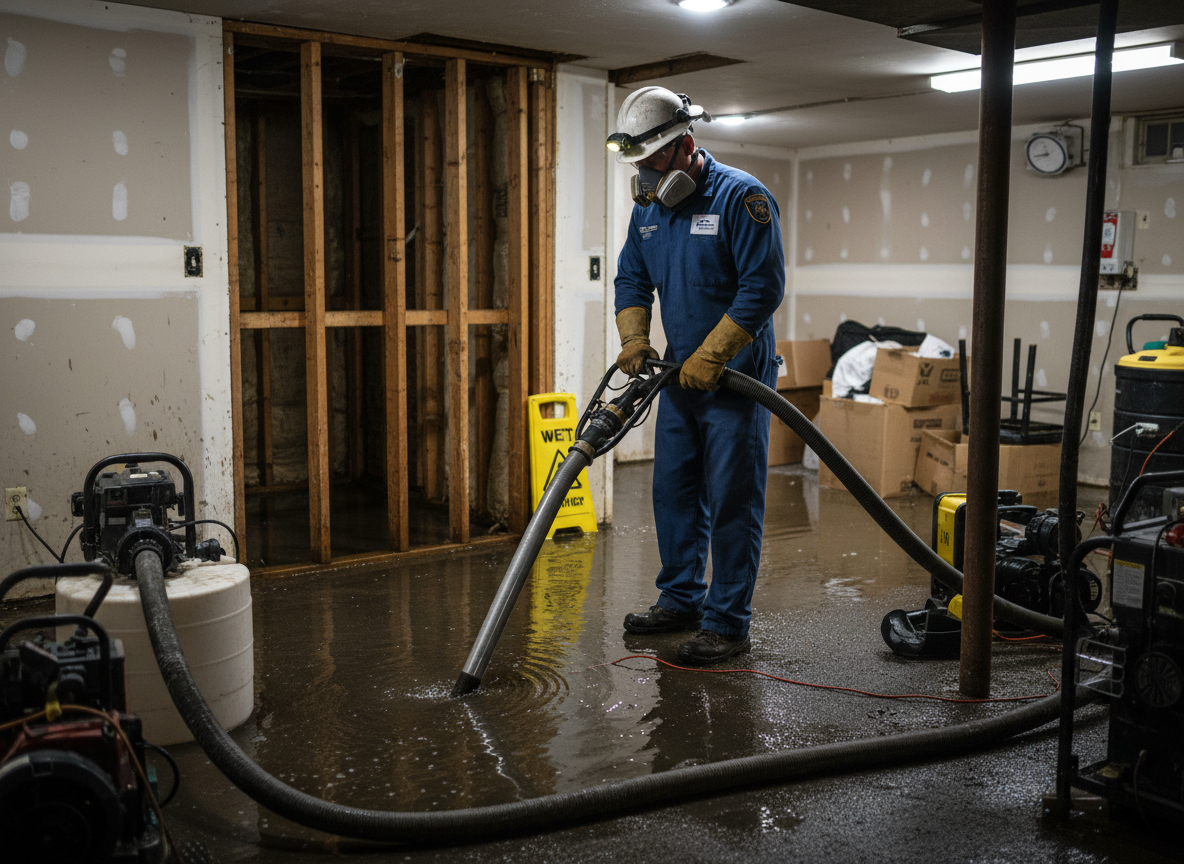
Standing water is removed with truck-mounted pumps and portable extractors to limit further absorption into floors and walls.
- 3
Drying and Monitoring
Air movers, dehumidifiers, and heaters are positioned while daily moisture readings track progress until levels return to normal.
- 4
Sanitization
Antimicrobial treatments are applied to framing and subfloors to reduce bacteria and mold risk before any rebuilding.
Pricing
Upfront quotes after inspection; scope and duration determine final cost.