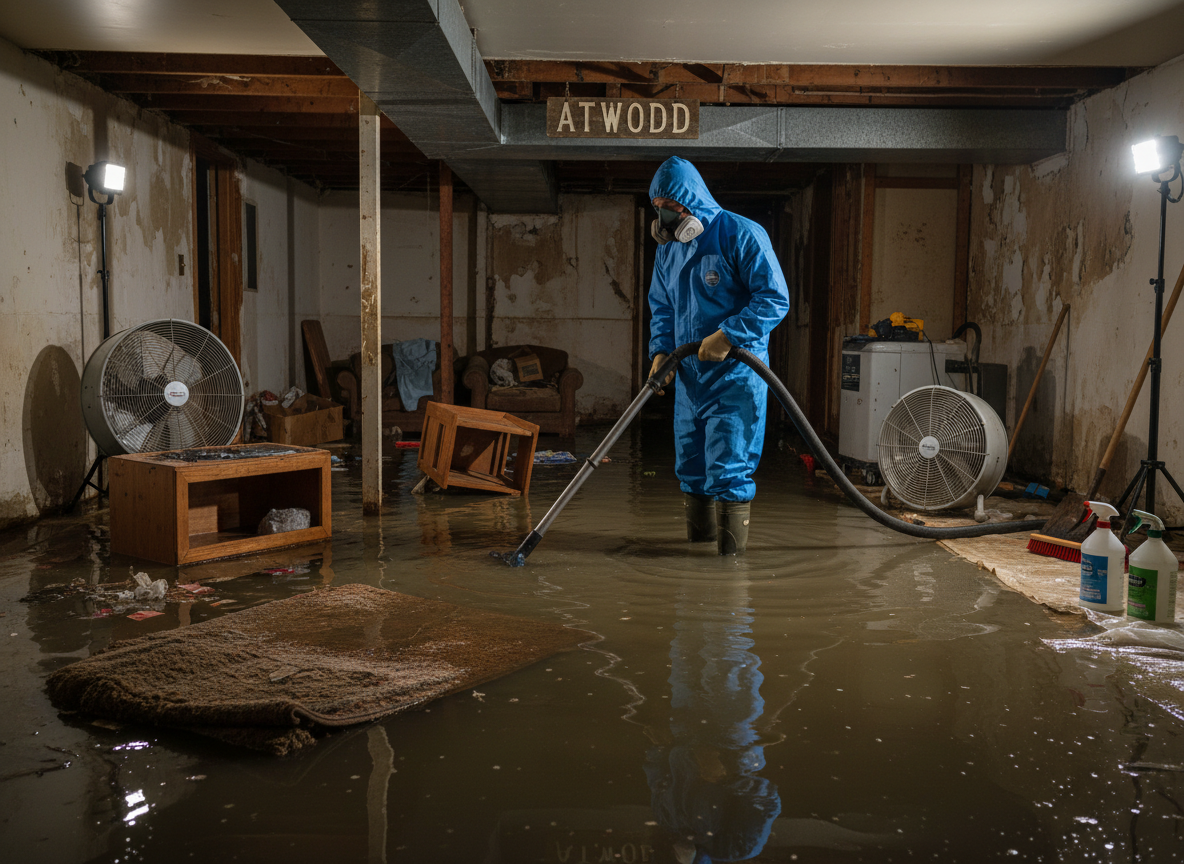
Water cleanup in Atwood homes often involves older single-story houses built along E Orangethorpe Ave where slab foundations and limited crawl spaces trap moisture after even moderate rain. Technicians start by locating the source, then use submersible pumps and truck-mounted extractors to pull water from carpet pads and hardwood before it migrates into walls. Because Atwood sits in a flat section of Orange County, water tends to pool rather than drain, requiring extra attention to baseboards and door thresholds.
After bulk removal, industrial air movers and dehumidifiers run for several days while moisture meters track hidden pockets inside drywall and under vinyl flooring common in 1960s-1970s builds. Technicians also check attics where roof leaks from rare but intense winter storms can saturate insulation without obvious ceiling stains. Leaving any damp material allows mold to form within 48 hours in the area's mild climate.
Final steps include HEPA vacuuming settled dust, applying antimicrobial treatments to affected framing, and documenting conditions for insurance adjusters. Crews return daily to adjust equipment until readings drop below 12 percent moisture content. Homeowners are advised to move furniture and break down boxes early so extraction can begin without delay.
Technician insight
In Atwood the thing that catches most people out with water cleanup services is how quickly moisture travels under the slab in homes east of Orangethorpe Ave; once it reaches the subfloor you have to pull more flooring than the visible stain suggests or it will keep feeding mold during our dry summers.
Pipe Leak Under Kitchen Slab
A homeowner noticed water seeping from under the cabinets in an Atwood house off Orangethorpe. Extraction revealed the leak had traveled several feet under the slab. Crews removed the vinyl, extracted water from the subfloor, and ran drying equipment for four days until readings normalized.
How it works
- 1
Arrival and Assessment
Technician arrives within the hour, identifies water source, and maps affected rooms using moisture meters.
- 2
Water Extraction
Standing water is removed with pumps and wands from floors, carpets, and hard surfaces.
- 3
Drying and Monitoring
Air movers and dehumidifiers are placed; daily readings track progress until materials are dry.
- 4
Sanitizing and Clearance
Antimicrobial application and final inspection confirm the space is ready for repairs.
Pricing
Cost depends on the volume of water, number of affected rooms, and how long materials have been wet; quotes are provided after the initial assessment.