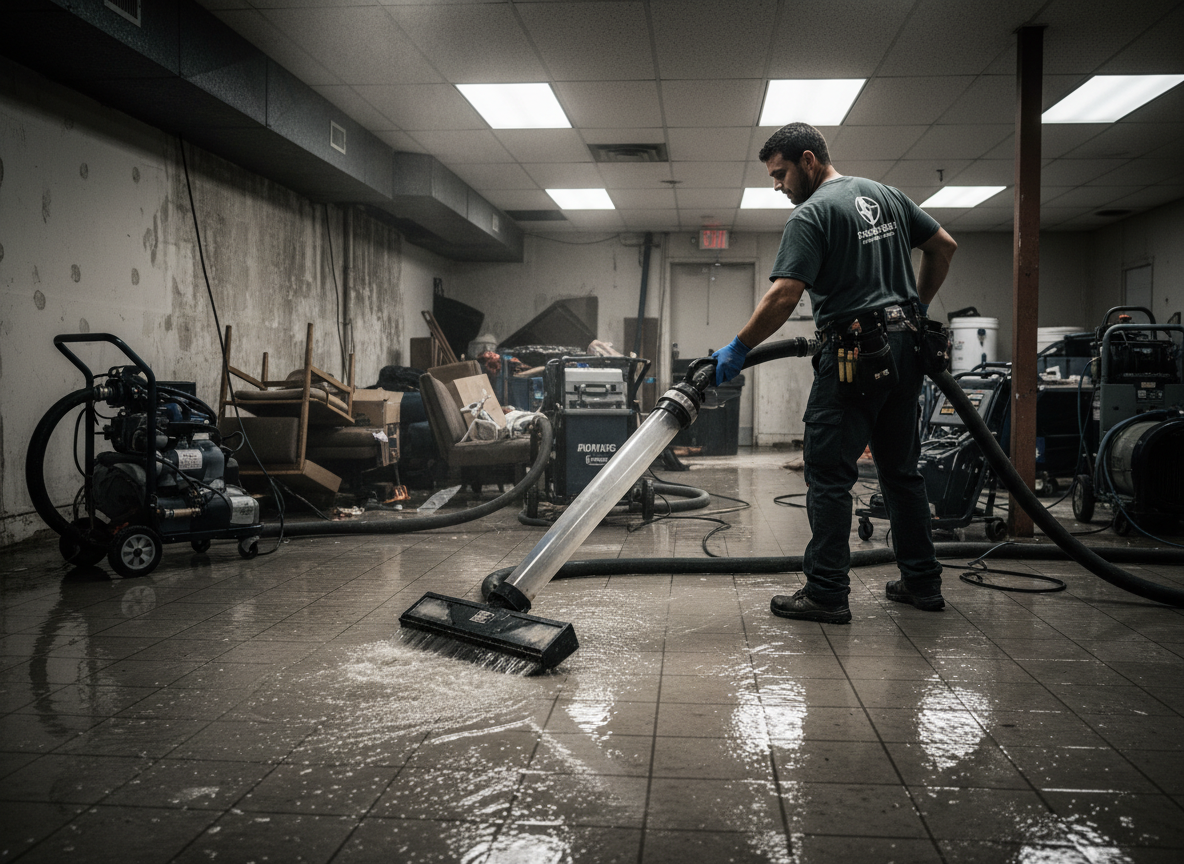
Rapid water extraction in Atwood focuses on removing standing water from homes built mostly in the 1950s and 1960s along streets like Orangethorpe and Lakeview. These properties often have slab foundations or small crawl spaces where water migrates quickly under flooring. Using truck-mounted extraction units and submersible pumps, technicians pull water out before it reaches wall cavities or electrical systems common in the older stock. Delaying extraction even a few hours raises the risk of hidden moisture under cabinets and behind baseboards in these compact layouts.
Winter rain events in the Atwood area can overwhelm older drainage around single-family homes near the 57 freeway corridor. Extraction crews prioritize low spots in garages and utility rooms first because water pools there due to the slight grade toward the Santa Ana River basin. Portable extractors handle the final inches that truck units miss, especially in carpeted bedrooms where padding holds water against the slab. Technicians also check for water that has traveled into adjacent rooms through doorways, a frequent pattern in the ranch-style floor plans found throughout Atwood.
Edge cases include extraction around finished basements or added bathrooms where plumbing runs under concrete. In these situations, crews cut strategic access points only when meters show elevated moisture readings, avoiding unnecessary demolition. Local building practices mean many homes lack vapor barriers under slabs, so extraction must continue until relative humidity in the subfloor drops below saturation levels. This prevents recurring issues when summer heat drives residual moisture upward through tile or hardwood.
Technician insight
In Atwood, the thing that catches most people out with Rapid water extraction is water traveling under the slab in 1950s homes along Orangethorpe because the flat lots and older grading let it spread farther than it appears from the surface.
Washing machine overflow in utility room
Water from a failed hose spread across a laundry room and into the adjacent hallway of an Atwood home. Extraction units removed the bulk quickly while portable tools pulled water from under the washer and dryer. Follow-up meter checks confirmed the slab stayed dry enough to avoid hidden damage behind the wall.
How it works
- 1
On-site evaluation
Technicians arrive and measure water depth, identify migration paths through the home, and locate electrical hazards before starting pumps.
- 2
Standing water removal
Truck-mounted units extract bulk water from floors while submersible pumps handle deeper pockets in utility areas and garages.
- 3
Targeted extraction
Portable equipment pulls remaining water from carpet, padding, and hard surfaces, with attention to areas under appliances and cabinets.
- 4
Moisture verification
Meters confirm dryness levels across slabs and walls before equipment is removed, ensuring no pockets remain in Atwood's typical slab construction.
Pricing
Cost depends on water volume, number of affected rooms, and time required on site; estimates given after inspection.