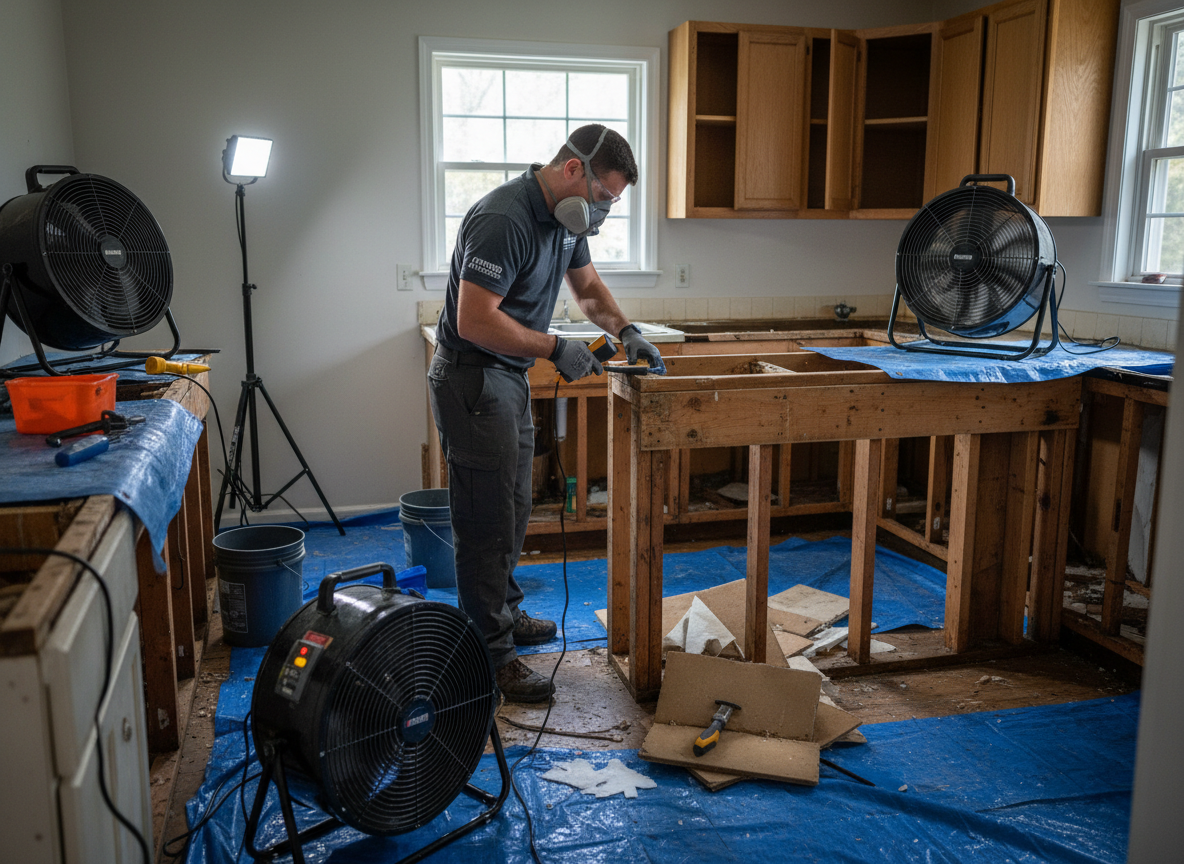
Kitchens in Atwood homes often feature older particleboard cabinet bases and laminate or vinyl flooring installed over concrete slabs or raised wood subfloors. When a dishwasher or refrigerator supply line fails, water travels quickly under toe kicks and into the underlayment, requiring removal of base cabinets for proper drying. Technicians must map moisture with meters because drywall behind counters can wick water upward several inches without visible staining on the surface.
Appliance connections present unique challenges in the Atwood area. Older homes near Orangethorpe often have galvanized or polybutylene supply lines that corrode at fittings. A slow leak at the shutoff valve can saturate the floor beneath the appliance before any pooling appears. Restoration crews isolate power and gas first, then use air movers and dehumidifiers directed under cabinets while protecting adjacent living areas from dust and noise during demolition.
Code considerations matter when replacing soaked materials. Orange County permitting may apply if structural subfloor sections are removed, and new underlayment must meet current moisture-resistance standards. Homeowners should expect inspection of adjacent rooms because water follows the path of least resistance along seams in vinyl or under baseboards into dining areas common in Atwood floor plans.
Technician insight
In Atwood, the thing that catches most people out with Kitchen water damage repair is how fast water travels under the toe kicks of 1970s-era cabinets along E Orangethorpe properties and saturates the particleboard before anyone notices a problem in the next room.
Dishwasher Leak Near Orangethorpe
Water from a failed inlet valve had already reached the subfloor beneath the kitchen. Extraction and targeted drying stopped further migration into the adjacent hallway. Affected cabinet bases were removed and the area dried thoroughly before new underlayment was installed.
How it works
- 1
Emergency Assessment
Arrive on site, locate the water source, and document all affected kitchen zones with photos and moisture readings.
- 2
Water Extraction
Remove standing water from floors and inside cabinets using portable extractors and pumps suited for tight spaces.
- 3
Drying and Monitoring
Place drying equipment under cabinets and behind appliances, then track moisture levels daily until readings return to normal.
- 4
Material Removal and Replacement
Cut out damaged drywall, underlayment, and cabinet bases, then coordinate with licensed trades for reconstruction.
Pricing
Upfront written estimates provided after inspection; final cost depends on square footage affected and materials requiring removal.