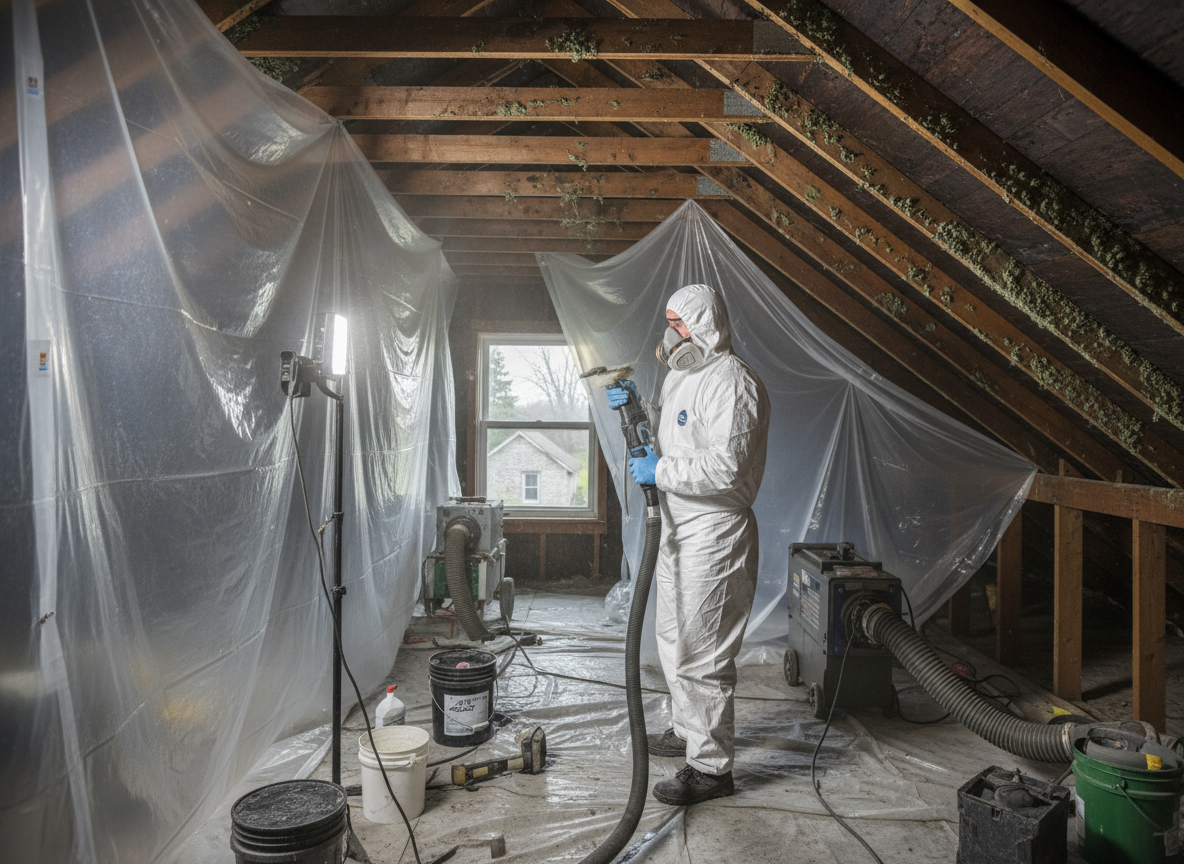
Attic mold remediation starts with locating the water source that allowed spores to take hold. In Atwood homes, roof leaks around older flashing or HVAC condensation lines often feed moisture into insulation and rafters where airflow is limited. Technicians map moisture with meters, then establish containment to keep spores from drifting into living spaces below. Removal focuses on affected materials rather than surface cleaning alone, because cellulose insulation and plywood sheathing can harbor growth that returns if left behind.
Edge cases appear when mold has spread along shared attic walls in duplexes or when rodent activity has disturbed insulation and spread spores. Code considerations in the Atwood area require proper disposal of contaminated materials and verification that the structure meets ventilation standards after work. Homeowners should avoid disturbing the space themselves, as improper handling can increase airborne particles and complicate insurance documentation for the underlying water damage claim.
Post-remediation verification includes moisture readings below 15 percent and visual clearance before insulation replacement. Seasonal rain patterns in the Atwood area can reintroduce moisture if gutters or downspouts remain clogged, so the final report always notes any exterior corrections needed to reduce recurrence risk.
Technician insight
In Atwood, the thing that catches most people out with attic mold remediation is how quickly condensation from bathroom exhaust fans that vent into the attic combines with the limited ridge vent airflow in the older single-story homes here, letting mold establish along the north-facing rafters before any ceiling stain shows up downstairs.
Hidden leak behind HVAC line
A homeowner noticed musty smell but no ceiling spots. Inspection found a slow condensate leak dripping onto insulation near the ridge. Containment was set, wet material removed, the line rerouted, and the attic dried. Follow-up readings stayed dry and the odor cleared.
How it works
- 1
Initial Inspection
Technicians arrive 24/7, assess visible water stains, use moisture meters on sheathing and insulation, and identify the entry point without disturbing the space.
- 2
Containment Setup
Plastic barriers and negative air machines isolate the attic from the rest of the home to prevent spore migration during removal.
- 3
Source Correction and Removal
Repair the leak, remove saturated insulation and affected wood, then clean non-porous surfaces with appropriate antimicrobial agents.
- 4
Drying and Verification
Apply air movers and dehumidifiers, retest moisture levels, and confirm clearance before allowing re-entry or insulation reinstall.
Pricing
Cost depends on attic size, extent of hidden growth, and whether insulation must be replaced; upfront quotes provided after inspection.